

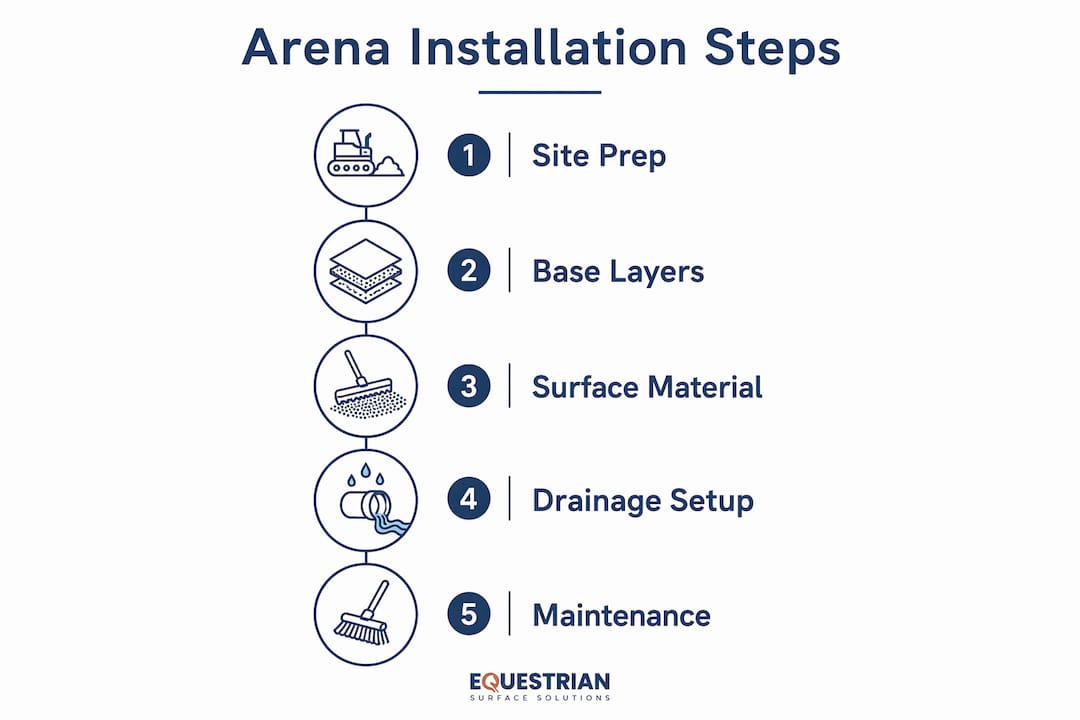
All-weather arena surface installation is the process of building a riding arena that performs consistently in rain, frost, and dry conditions, combining correct drainage engineering, a load-bearing base, and a suitable surface blend. A professionally designed arena requires a drainage slope of 1%–2% with robust sub-surface drainage to prevent base saturation. Get this foundation right and the surface material you choose will perform as intended. Get it wrong and no amount of premium footing will save you from boggy corners and costly repairs.
How to prepare the site for all-weather arena surface installation
Site preparation is the single most important phase of any arena build. Poor preparation causes more arena failures than any surface material choice ever could.
Start with a thorough site assessment. Identify the natural direction of water flow across the plot, and commission a soil test before any groundworks begin. Clay-heavy soils retain water and require more aggressive drainage solutions than free-draining sandy loams. Remove all organic topsoil, roots, and vegetation to a depth that reaches stable, load-bearing ground.
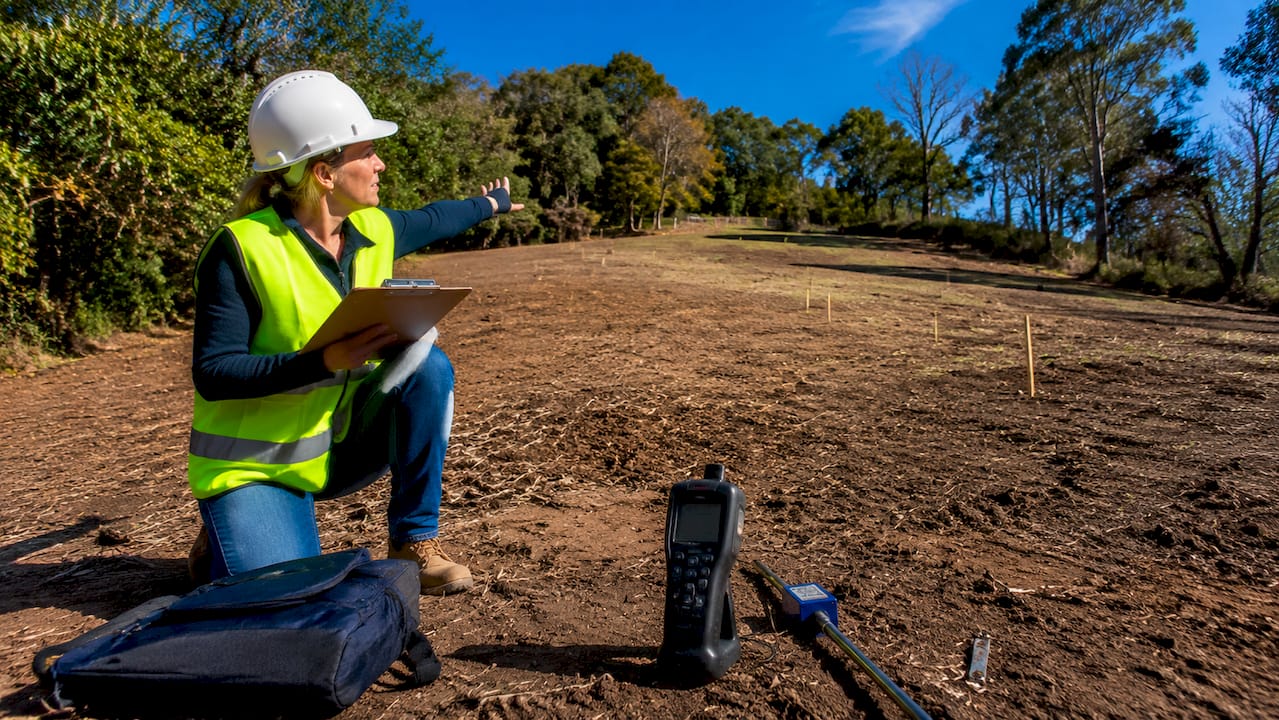
Grading is where most facility owners make their first critical error. Many assume a flat arena is ideal. A 1%–2% slope or crown is the correct standard, shedding surface water quickly and preventing it from pooling at the base. Standing water is the primary cause of base failure, and even small puddles soften the foundation over time, leading to expensive remediation.
Key site preparation steps:
- Remove all topsoil and organic material to a stable sub-grade
- Commission a soil permeability test to inform drainage design
- Grade the site to a consistent 1%–2% slope or crown using laser-level grading for precision
- Install perimeter French drains lined with geotextile fabric to intercept and divert groundwater
- Allow adequate time for the sub-grade to settle before base construction begins
Pro Tip: Laser-level grading removes the guesswork from slope accuracy. A contractor working by eye alone will rarely achieve the consistent gradient needed to prevent water pooling across a 40m x 20m arena.
Perimeter French drains with geotextile fabric prevent clogging and divert water away from the arena base effectively. This sub-surface drainage layer is not optional on UK sites where rainfall is frequent and ground saturation is a seasonal reality.
What base layers does a durable arena need?
A stable, load-bearing base is what separates an arena that lasts a decade from one that fails within two winters. The base must distribute the weight of horses and machinery evenly, resist settlement, and allow water to pass through freely.
- Excavate to a stable sub-grade. Remove any soft, waterlogged, or organic material. Over-excavation is preferable to leaving unsuitable soil in place.
- Install a geotextile separation membrane. This prevents fine soil particles from migrating upward into the base aggregate over time. Geotextile membranes create a stable, free-draining base that resists rutting and settlement under repeated loading.
- Lay a sub-base of crushed limestone or granite. A minimum depth of 150mm is standard for equestrian use, though heavier-use competition arenas often require 200mm or more. Compact each layer thoroughly with a heavy vibratory roller before adding the next.
- Add a compacted road-base or crusher-run layer. This finer aggregate binds the surface and provides a smooth, even platform for the riding surface above.
| Base layer | Material | Purpose |
|---|---|---|
| Sub-grade | Stable native soil or imported fill | Load-bearing foundation |
| Separation membrane | Geotextile fabric | Prevents soil migration |
| Sub-base | Crushed limestone or granite | Drainage and load distribution |
| Base course | Crusher-run or road-base aggregate | Even platform for riding surface |
The arena base directly affects surface longevity. A well-compacted base with correct drainage will extend the life of any surface material placed on top. The most common mistake is insufficient compaction depth, which leads to settlement, uneven footing, and surface breakdown within the first year.
Pro Tip: The arena base must withstand freeze-thaw cycles. Cellular confinement systems and geotextile fabric barriers prevent soil migration and frost heave, which are the two most damaging winter forces acting on an arena base in the UK.
Which surface material gives the best all-weather performance?
Choosing the right riding surface is where discipline, budget, and climate all intersect. The surface must provide consistent grip, adequate cushioning, and stability across wet, dry, and freezing conditions.
The main surface types used in UK equestrian arenas are:
- Silica sand. The foundation of most arena surfaces. Sub-angular silica sand grains interlock more effectively than round fill sand, providing better stability and grip. Silica sand alone suits lower-intensity training but can become dusty in dry conditions and compacted under heavy use.
- Sand and fibre blends. Fibre reinforcement added to silica sand improves cushioning, reduces compaction, and helps the surface retain moisture. These blends suit a wide range of disciplines from flatwork to jumping and represent the most popular choice for private training facilities.
- Waxed surfaces. Waxed surfaces are the gold standard for competition arenas. The wax coating binds the surface particles together, suppresses dust, and delivers consistent performance in wet and dry conditions. The trade-off is a higher initial investment and more demanding maintenance requirements.
Surface depth matters as much as material choice. Too shallow and the surface offers insufficient cushioning, increasing injury risk. Too deep and horses work harder, causing fatigue. The correct depth varies by discipline and surface type, so always follow the material supplier’s specification.
Pro Tip: If you are specifying a surface for competition use, read the complete guide to competition arena surfaces before committing to a material. The performance requirements for affiliated dressage differ significantly from those for a hunter trial warm-up arena.
Dust suppression is a year-round concern for indoor and outdoor arenas alike. Sand and fibre blends manage dust better than plain silica sand. Waxed surfaces eliminate the problem almost entirely, which is one reason they dominate at affiliated competition venues.
How do you maintain an all-weather arena and fix common problems?
Routine maintenance protects your investment and keeps the surface safe for horses. Daily to weekly harrowing and watering in summer are the two most effective maintenance practices for prolonging surface life. Neglect either and you will see uneven depths, packed corners, and increased injury risk within months.
Maintenance essentials:
- Harrow the surface regularly to redistribute material and prevent compaction
- Water during dry periods to maintain moisture content and dust control
- Check surface depth at multiple points monthly and top up as required
- Clear debris, leaves, and contamination promptly to prevent surface degradation
- Inspect drainage outlets and French drain inlets after heavy rainfall
“Soft corners or boggy spots always indicate foundational drainage failure rather than a surface material problem. Addressing the sub-base drainage is more critical than replacing the footing.” — Mark Eibner, Colorado Horse Property
Soft corners and boggy spots reliably indicate poor slope, clogged drainage, or base softening. Replacing the surface footing without fixing the underlying drainage issue wastes money and time. Dig a test hole in the affected area to assess whether water is sitting on top of the base or within it before deciding on a repair approach.
Winter management requires specific attention. Freeze-thaw cycles lift and disrupt surface material, particularly in arenas where moisture is trapped in the base. Maintain drainage outlets through autumn and consider a fibre surface blend to reduce the risk of freezing, as fibre retains less surface water than plain sand.
Pro Tip: Keep a simple maintenance log recording harrowing frequency, watering, depth checks, and any drainage issues. A written record makes it far easier to spot patterns and address problems before they become expensive.
Key takeaways
A well-drained, correctly compacted base is the single most important factor in all-weather arena surface installation, and no surface material compensates for poor foundational engineering.
| Point | Details |
|---|---|
| Drainage slope is non-negotiable | Grade the site to a 1%–2% slope or crown to shed water and prevent base failure. |
| Base layers determine longevity | Use crushed limestone or granite with geotextile membranes, compacted in layers, for a stable platform. |
| Surface choice depends on discipline | Waxed surfaces suit competition arenas; sand-fibre blends suit most training facilities. |
| Maintenance prevents costly repairs | Harrow and water regularly, check surface depth monthly, and inspect drainage after rainfall. |
| Drainage failures show as soft corners | Boggy spots signal sub-base problems, not surface material failure. Fix the drainage first. |
What I have learned from watching arenas fail and succeed
The arenas I have seen fail fastest share one thing in common: the owner invested heavily in premium surface material and almost nothing in the base. A waxed surface on a poorly graded, under-compacted base will be a boggy mess within two winters. The surface gets the blame, but the base is always the culprit.
The arenas that perform year after year are rarely the most expensive builds. They are the ones where the contractor spent time on site assessment, graded accurately, compacted thoroughly, and chose a surface material matched to the actual use of the arena. A private yard with two horses in light work does not need a waxed surface. A competition venue running affiliated classes every weekend does.
My honest advice is to spend your budget on drainage and base construction first. If that means choosing a mid-range sand-fibre blend over a premium waxed surface, make that trade-off without hesitation. You can upgrade the surface later. You cannot easily fix a failed base without rebuilding from scratch.
Get a professional site survey before groundworks begin. The cost is modest relative to the total build, and it will identify drainage challenges, soil conditions, and grading requirements that are invisible to the untrained eye. Proactive planning at this stage saves far more than it costs.
— Stacey
How Equestrian Surface Solutions can help with your arena build
Planning an arena build or refurbishment is a significant investment, and getting the material specification right from the start saves time and money.

Equestrian Surface Solutions supplies specialist silica sand, fibre blends, rubber additives, and drainage membranes for equestrian arena construction and refurbishment projects across the UK. Whether you are building a competition arena that demands waxed surface performance or a private training facility where a sand-fibre blend is the practical choice, the team at Equestrian Surface Solutions will help you specify the right materials for your discipline, budget, and riding goals. Self-build kits are available for facility owners managing their own groundworks. Request a tailored surface quote to get material recommendations and pricing specific to your project.
FAQ
What is an all-weather arena surface?
An all-weather arena surface is a riding surface engineered to perform consistently in rain, frost, and dry conditions. It combines correct drainage, a stable base, and a suitable surface material such as silica sand, a sand-fibre blend, or a waxed surface.
What drainage slope does an arena need?
A slope of 1%–2% is the recognised standard for outdoor equestrian arenas. This gradient sheds surface water quickly and prevents it from pooling at the base, which is the leading cause of base failure.
How deep should the riding surface be?
Correct depth varies by surface type and discipline. Too shallow a surface increases injury risk; too deep causes horse fatigue. Always follow the specification provided by your surface material supplier for the specific blend you are installing.
What causes boggy spots in an arena?
Boggy spots and soft corners indicate foundational drainage failure, not a surface material problem. The cause is typically a poor slope, clogged French drains, or base softening from standing water. Fix the drainage before replacing any footing.
How much does all-weather arena surface installation cost?
Arena surface installation costs vary significantly depending on size, base depth, drainage requirements, and surface material choice. A detailed arena cost breakdown will give you a realistic figure based on your specific site and specification.
