

A horse arena’s cushion layer is the engineered top footing that absorbs impact, reduces concussion on horse limbs, and supports efficient movement. Known in the industry as the top footing layer, it sits above a compacted sub-base and base, typically comprising a blend of silica sand combined with synthetic fibres or recycled rubber. Getting this layer right is the single most important decision in arena construction. Too shallow and your horse suffers repeated concussion. Too deep and tendon strain becomes a genuine risk. Understanding what a cushion layer in a horse arena actually does, and how to build it correctly, is the foundation of safe, long-term riding.
What materials make up a horse arena cushion layer?
The cushion layer is not a single material. It is an engineered blend, and the ratio of each component determines how the surface performs under your horse’s hooves.
Silica sand forms the base of almost every cushion layer. It provides structural stability and drainage while acting as the carrier for any additives. The sand particle size matters considerably. Angular particles interlock and resist displacement, while rounded particles shift more freely. For most UK arenas, a washed, graded silica sand is the preferred starting point, and Equestrian Surface Solutions supplies premium washed riding sand specifically graded for equestrian use.
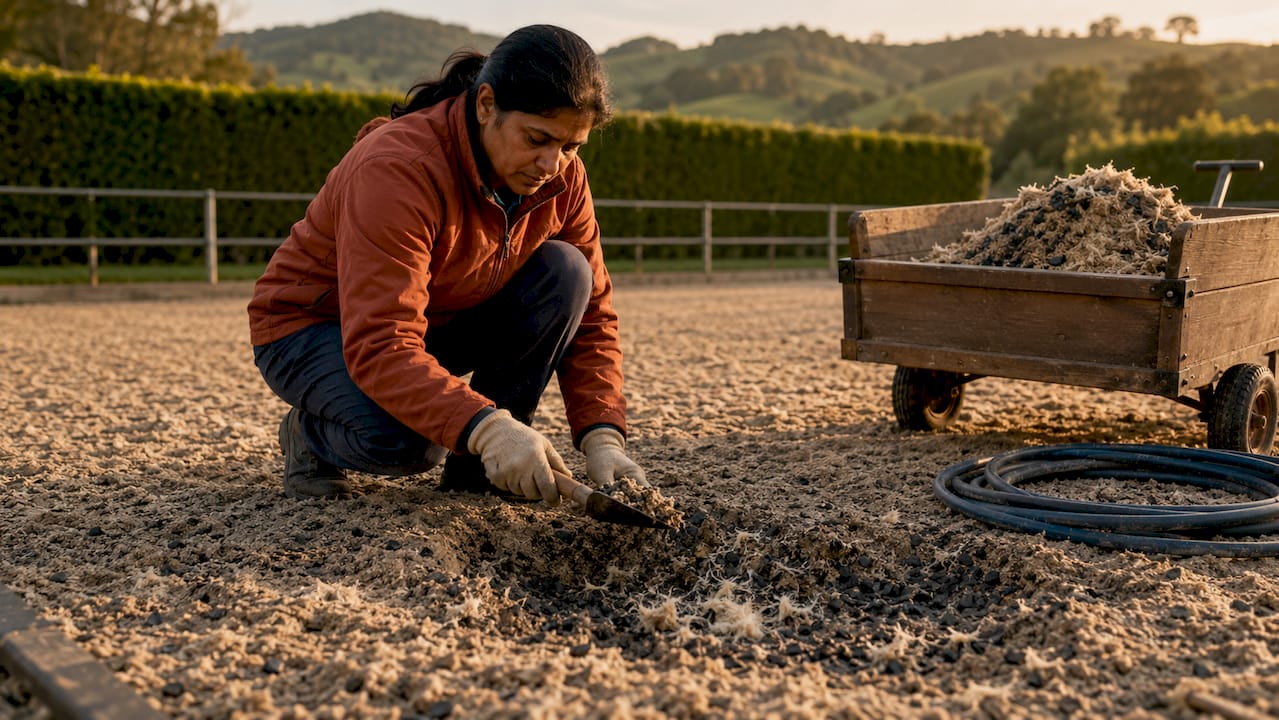
Synthetic fibres are the most widely used additive. Fibres mixed at 5–10% volume create a stable, turf-like cushion that minimises surface movement and provides both grip and rebound energy. That rebound is critical. It returns energy to the horse’s stride rather than simply absorbing it, which reduces fatigue over a schooling session.
Recycled rubber granules offer a different kind of cushioning. Sand mixed with rubber granules of 1/4 to 3/8 inch in size suits horses with soundness concerns particularly well. Rubber adds a softer, more forgiving feel underfoot, which benefits horses recovering from injury or those working at high impact.
Other additives such as wood chip or shredded textile exist, but they are less common in professionally specified UK arenas. Wood degrades over time and can affect drainage. Textile blends vary widely in quality. For most horse owners, a sand and fibre blend or a sand and rubber blend delivers the most consistent, long-lasting result.
Pro Tip: Never judge a cushion layer by how soft it feels underfoot when you walk on it. The real test is rebound energy, which you can only assess by watching how your horse moves across the surface at trot and canter.
What is the ideal cushion layer depth, and why does it matter?
Depth is where most arena construction mistakes happen. The recommended top footing depth is 2–3 inches above a compacted stone dust sub-base. That range is not arbitrary. It reflects the biomechanical requirements of a horse’s hoof strike, weight transfer, and push-off phase.
At less than 2 inches, the surface provides insufficient shock absorption. The horse’s limbs absorb concussion directly, which over time contributes to joint stress, bruised soles, and lameness. At more than 3 inches, the footing becomes too deep. The hoof sinks further than intended, forcing the tendons and ligaments to work harder to stabilise each stride. Exceeding the recommended depth significantly increases injury risk, particularly to the superficial digital flexor tendon.
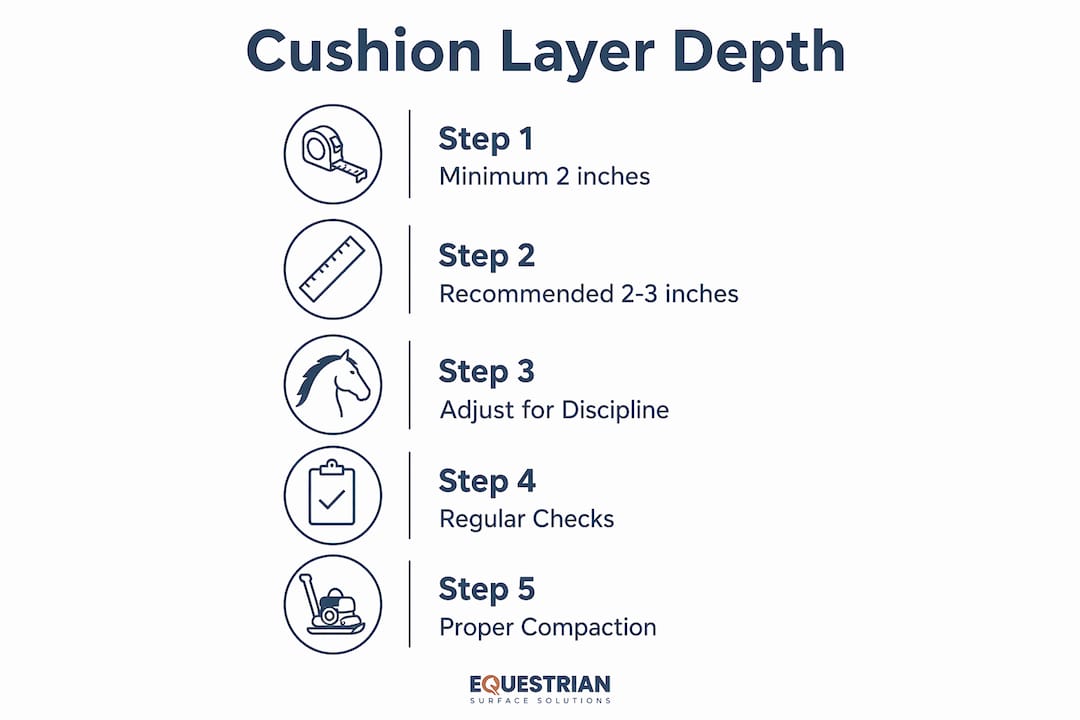
Discipline also influences the ideal depth within that 2–3 inch range. Dressage horses working at collected paces benefit from a surface sitting towards the firmer end of the range, where rebound is consistent and predictable. Jumping horses, by contrast, benefit from a surface sitting slightly deeper within the range, providing extra cushioning on landing.
Pro Tip: Check your cushion depth monthly using a simple ruler or depth gauge at multiple points across the arena. Depth varies with use, and the corners and track areas typically compact faster than the centre.
How does the cushion layer interact with the layers beneath it?
The cushion layer does not perform in isolation. Its effectiveness depends entirely on what sits beneath it. A correctly built arena uses 4–6 inches of crushed rock as the base, topped by 2–4 inches of stone dust sub-base, with the 2–3 inch cushion layer on top. Each layer has a distinct function, and the failure of any one layer compromises the whole surface.
The crushed rock base provides structural load-bearing capacity and primary drainage. Without it, the arena will move and settle unevenly under repeated use. The stone dust sub-base creates a smooth, compacted platform that prevents the cushion layer from sinking or mixing with the coarser material below. The arena base directly affects surface longevity, and a poorly prepared sub-base is one of the most common causes of premature surface failure.
The cushion layer then sits on top of this stable platform. When the sub-base is correctly compacted and graded, the cushion layer maintains a consistent depth across the whole arena. When the sub-base is uneven or inadequately prepared, the cushion layer migrates into low spots, creating dangerous inconsistencies in depth and footing quality.
Key signs that your base layers are failing to support the cushion layer include:
- Visible ruts or hollows that return after dragging
- Wet, boggy patches that do not drain after rain
- Uneven depth when measured across different areas of the arena
- Surface material migrating towards the perimeter or corners
Addressing base layer problems is more disruptive and costly than getting the construction right from the start. The investment in a correctly built foundation protects the cushion layer above it for many years.
What maintenance keeps the cushion layer safe and effective?
Cushioning is a dynamic property. As surfaces wear, fine particles alter the cushion’s behaviour, making ongoing maintenance as important as the initial installation. A surface that performed well when first laid will degrade without consistent upkeep.
The core maintenance tasks for any cushion layer are:
- Drag and groom regularly. Dragging redistributes compacted material, breaks up surface crust, and restores consistent depth across the arena. The frequency depends on usage, but most arenas benefit from dragging at least twice weekly under regular use.
- Monitor and manage moisture. A cushion layer that is too dry becomes dusty and loose. Too wet and it loses grip and cohesion. Watering systems or moisture-retaining additives help maintain the correct consistency.
- Check depth consistently. Measure depth at multiple points monthly. Top up material where depth has fallen below 2 inches. Lack of adequate maintenance and monitoring of cushion depth leads to surface degradation and increased injury risk.
- Watch for rubber migration. Rubber tends to migrate to low points without correct arena crowning and grading. If rubber concentrates in certain areas, the cushion becomes uneven and unpredictable.
- Inspect for surface contamination. Mud, organic debris, and weed growth all degrade cushion performance. Remove contamination promptly and address any drainage failures that allow it to accumulate.
Pro Tip: Regular assessment of surface consistency is more important than initial installation perfection. A well-maintained average surface outperforms a neglected premium one within a single season.
Which cushion layer suits your riding discipline and horse?
The right cushion layer depends on what you ask of your horse and the physical condition of the animal. Different disciplines require different cushion characteristics, and a surface that suits a dressage horse may not suit a showjumper.
- Dressage and flatwork. Fibre blends deliver consistent grip and predictable rebound. The surface stays stable under collected and extended paces, giving the horse a reliable platform for lateral work and transitions.
- Showjumping and cross-training. Rubber additives provide extra cushioning on landing. Horses working at high impact benefit from the additional shock absorption that rubber delivers, particularly on the forelimbs.
- Horses with previous injuries or sensitivity. A sand and rubber blend suits horses recovering from tendon or joint problems. The softer feel reduces peak impact forces without creating the excessive depth that causes tendon strain.
- All-weather and winter use. Fibre blends resist freezing better than plain sand surfaces. The interlocking fibres maintain surface integrity at lower temperatures, extending the usable season.
- Climate and environment. In wet UK conditions, drainage capacity is a priority. A well-graded silica sand base with fibre additive drains efficiently and resists compaction better than clay-heavy alternatives.
For a detailed comparison of surface materials by durability and discipline suitability, Equestrian Surface Solutions provides a full breakdown to help you match the right blend to your specific needs.
Key takeaways
The cushion layer is the most performance-critical component of any horse arena, and its depth, material composition, and maintenance determine both horse soundness and surface longevity.
| Point | Details |
|---|---|
| Correct depth is non-negotiable | Maintain 2–3 inches of top footing; shallower causes concussion, deeper causes tendon strain. |
| Material choice drives performance | Fibre blends suit flatwork; rubber additives suit jumping and horses with soundness concerns. |
| Base layers determine cushion stability | A 4–6 inch crushed rock base and 2–4 inch stone dust sub-base are required for consistent cushion depth. |
| Cushioning means rebound, not softness | An effective cushion layer returns energy to the horse’s stride rather than simply absorbing it. |
| Maintenance is ongoing, not optional | Regular dragging, depth checks, and moisture management preserve cushion performance over time. |
Why “soft” is the wrong thing to aim for
I have spoken with horse owners who spent considerable money on arena surfaces and then added more and more rubber because the surface “didn’t feel soft enough.” Every single one of them ended up with a surface that was too deep. Their horses started showing signs of tendon fatigue within months.
The misunderstanding is understandable. We associate cushioning with softness in everyday life. But an ideal arena surface returns rebound energy to the horse rather than simply absorbing it. A surface that is too soft does the opposite. It swallows energy, forces the horse to work harder, and places excessive load on the tendons and ligaments with every stride.
The other thing I see consistently overlooked is that cushioning changes over time. Fine particles accumulate as the surface wears. Those fines alter how the layer behaves. A surface that felt perfect in month one can become dangerously compacted or unpredictably loose by month six without consistent maintenance. The riders who get the most from their arenas are not necessarily those who spent the most on installation. They are the ones who drag, check depth, and manage moisture as a matter of routine.
Get the depth right. Choose materials matched to your discipline. Then maintain consistently. That is the whole formula.
— Stacey
Arena surfaces from Equestrian Surface Solutions
Choosing the right cushion layer blend is straightforward when you have the right materials and the right guidance behind you. Equestrian Surface Solutions supplies professionally specified arena footing for all disciplines, from washed silica sand and synthetic fibre blends to recycled rubber additives and drainage membranes.

Whether you are building a new arena from scratch or refurbishing an existing surface, the team at Equestrian Surface Solutions can help you specify the correct materials for your discipline, budget, and ground conditions. Self-build kits are available with full technical support, and bespoke quotes are straightforward to request. Ride with confidence, knowing your surface is built to perform and last.
Get a quote today and speak directly with a specialist about the right cushion layer for your arena.
FAQ
What is a cushion layer in a horse arena?
A cushion layer is the engineered top footing of a horse arena, typically 2–3 inches deep, comprising a blend of silica sand with synthetic fibres or recycled rubber. It absorbs impact, reduces concussion on horse limbs, and provides grip and rebound energy.
How deep should a horse arena cushion layer be?
The recommended depth is 2–3 inches above a compacted stone dust sub-base. Shallower than 2 inches causes concussion; deeper than 3 inches increases tendon strain and injury risk.
What is the difference between fibre and rubber in a cushion layer?
Synthetic fibres at 5–10% volume create consistent grip and rebound, suiting dressage and flatwork. Recycled rubber granules provide additional shock absorption, making them better suited to jumping disciplines and horses with soundness concerns.
How often should I maintain my arena cushion layer?
Drag and groom at least twice weekly under regular use, check depth monthly, and manage moisture consistently. Surface degradation from inadequate maintenance increases injury risk and shortens the surface’s working life.
Can I add more material to deepen my cushion layer?
Adding material beyond the 3-inch maximum creates excessive depth that forces greater hoof movement and increases tendon strain. Top up only to restore depth that has fallen below 2 inches through compaction or displacement.
