
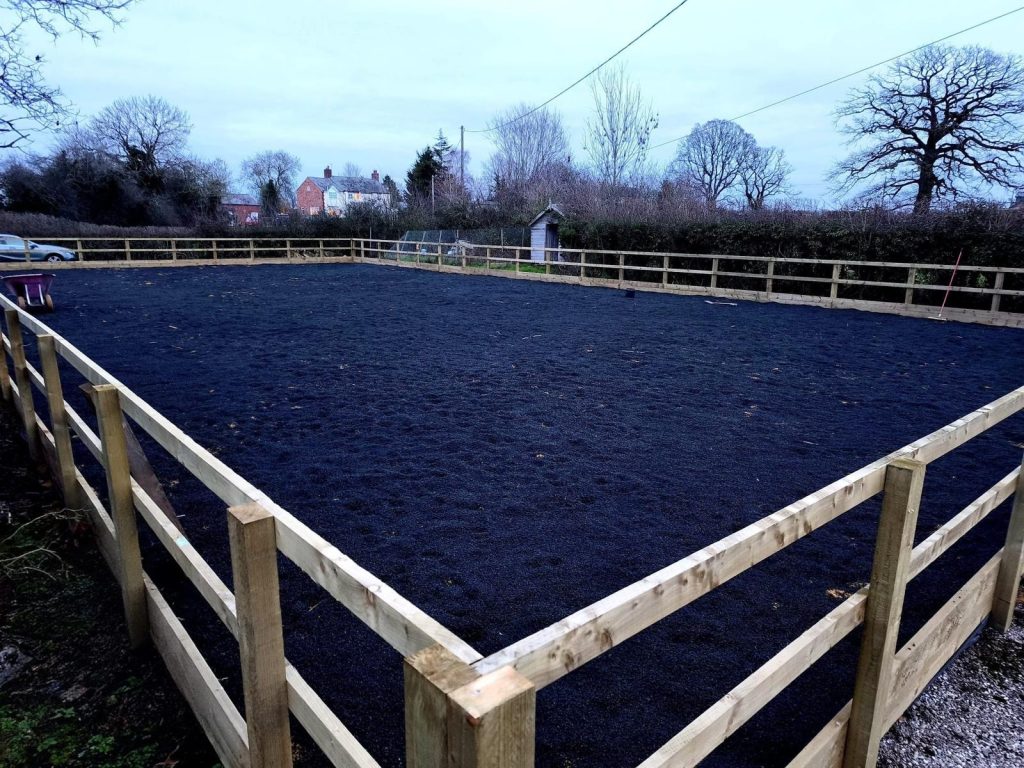
When investing in an equestrian arena, lifespan matters just as much as ride quality. Different surfaces may look similar on day one, but their durability, maintenance demands and long-term value vary significantly. Below we compare fibre, rubber and woodchip to see which truly stands the test of time.
Woodchip – Short Lifespan, High Breakdown
Woodchip is one of the cheapest riding arena materials initially, but also the quickest to deteriorate. Organic particles rot, compact and shift rapidly under use and weather. Drainage becomes inconsistent and cushioning disappears as the material breaks down.
Common woodchip arena problems: compaction, uneven ride, rapid decay.
- Typical arena surface lifespan: 1–3 years
Rubber – Moderate Durability
Rubber provides better longevity than woodchip, but still migrates over time and loses consistency. It often requires frequent levelling and topping up, particularly in high-traffic areas. Rubber chip also relies heavily on the underlying sand remaining clean and stable.
Maintenance: regular topping up and redistribution.
- Typical surface lifespan: 3–6 years
Fibre – Long-Term Performance Winner
A fibre arena surface such as Standalone Fibre is designed to interlock and stabilise the top layer, dramatically reducing migration and breakdown. It holds moisture more evenly, drains well and maintains cushioning far longer than both rubber and woodchip. Fibre also protects the sand beneath, extending the life of the entire arena structure.
Benefits: Lower maintenance, consistent ride, superior durability.
- Typical lifespan: 10-20+ years
The Verdict
While rubber and woodchip may offer short-term savings, fibre delivers the best arena surface for horses when considering longevity, safety and value. A properly installed fibre surface lasts significantly longer, rides better year-round and reduces the ongoing costs associated with constant repairs and top-ups.
