

Equestrian silica sand is a high-purity, washed, and graded sand with a silicon dioxide content of at least 95%, processed specifically for use in horse riding arenas. Unlike general-purpose building sand or river sand, it is screened to remove clay, silt, and organic matter, then graded to a defined particle size range that supports drainage, stability, and safe footing for horses. The key to its performance lies in particle shape: sub-angular grains interlock under pressure to create a surface that absorbs shock without collapsing underfoot.
At a glance, the core benefits for horse arenas are:
- Drainage: the low clay and silt content keeps pores open, preventing waterlogging
- Stability: sub-angular particles interlock to resist excessive movement under hoof
- Durability: quartz rates 7 on the Mohs scale, meaning it resists breakdown under repeated impact
- Low dust: thorough washing removes the fine fraction that becomes airborne
What makes equestrian silica sand different from regular sand?
The distinction between equestrian-grade silica sand and ordinary sand goes well beyond marketing. River and bank-run sands contain softer minerals such as feldspar and limestone alongside rounded quartz grains. Those softer minerals break down under hoof traffic, generating fine particles that compact the surface and create dust that horses inhale. Rounded particles also behave like ball bearings: they roll rather than interlock, producing an unstable, “beach-like” surface that strains tendons.
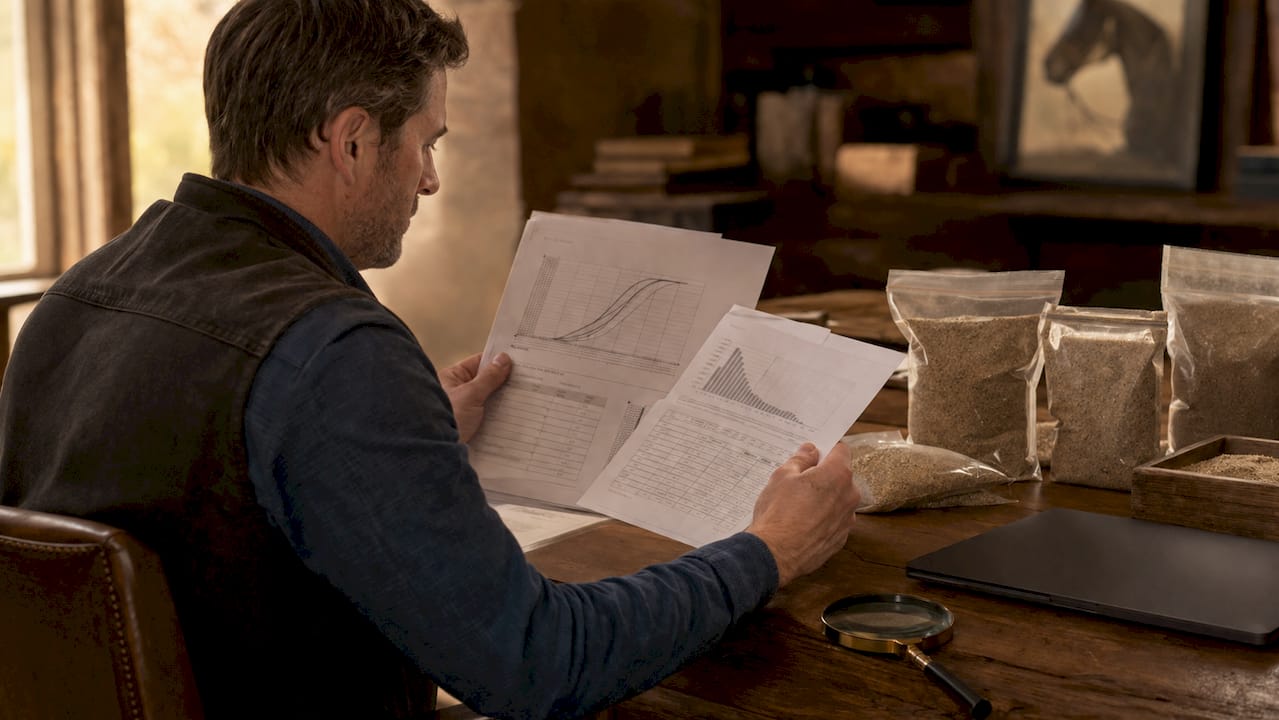
Equestrian silica sand addresses both problems. The washing process strips out clay and silt, and the quarrying source preserves the sub-angular grain shape that mined deposits naturally develop. The result is a sand that stays loose enough for comfort yet firm enough for propulsion.
| Quality parameter | Equestrian silica sand | General building or river sand |
|---|---|---|
| SiO₂ content | ≥95% | Variable, often below 95% |
| Particle shape | Sub-angular | Rounded |
| Clay and silt content | Very low (washed) | Often high |
| Particle size grading | Defined, narrow range | Wide, inconsistent |
| Mohs hardness | 7 (quartz) | Lower for softer minerals |
Key quality parameters to look for:
- Purity: SiO₂ content of 95% or above confirmed by laboratory analysis
- Particle shape: sub-angular, not rounded or sharply crushed
- Grading certificate: a defined, narrow particle size distribution
- Low fines: clay and silt removed by washing to prevent compaction and drainage failure
- Hardness: quartz-based sand rated 7 on the Mohs scale resists breakdown and reduces the need for frequent top-dressing
How silica sand is used and installed in horse arenas
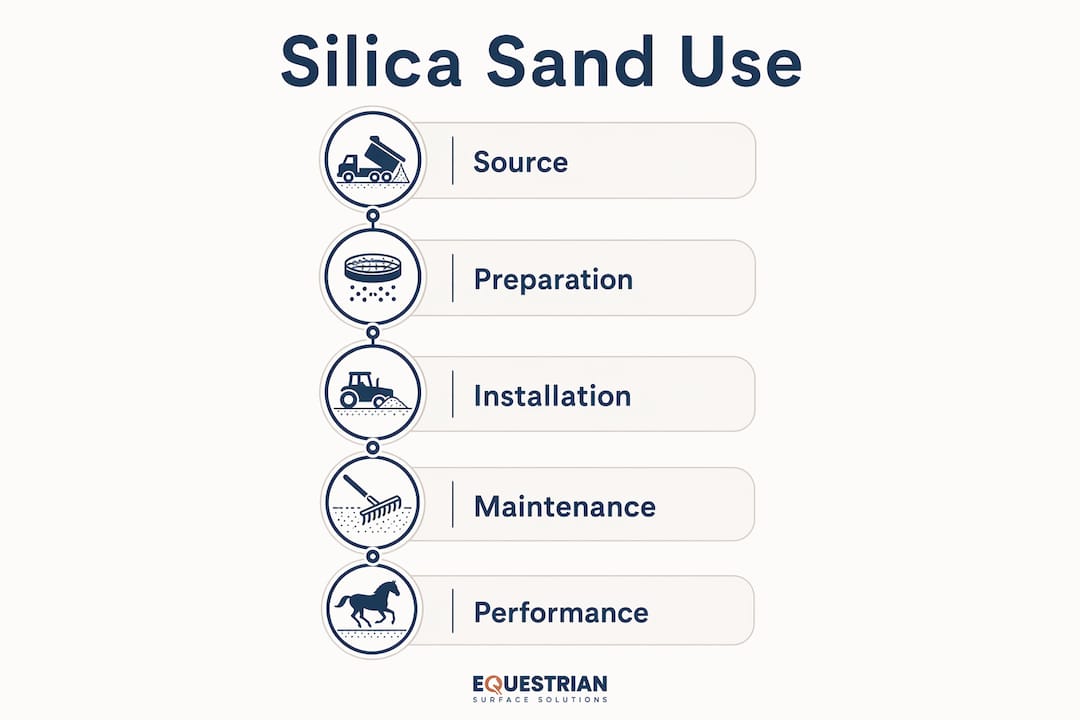
Silica sand serves as the foundational layer across a wide range of equestrian settings: outdoor and indoor riding arenas, training gallops, round pens, lunging areas, and therapeutic riding facilities, as explained in detail by Location box cheval et écurie — Place équestre | SpareSpot. Each application shares the same principle: a stable, well-drained base that can be tuned with additives to suit the discipline.
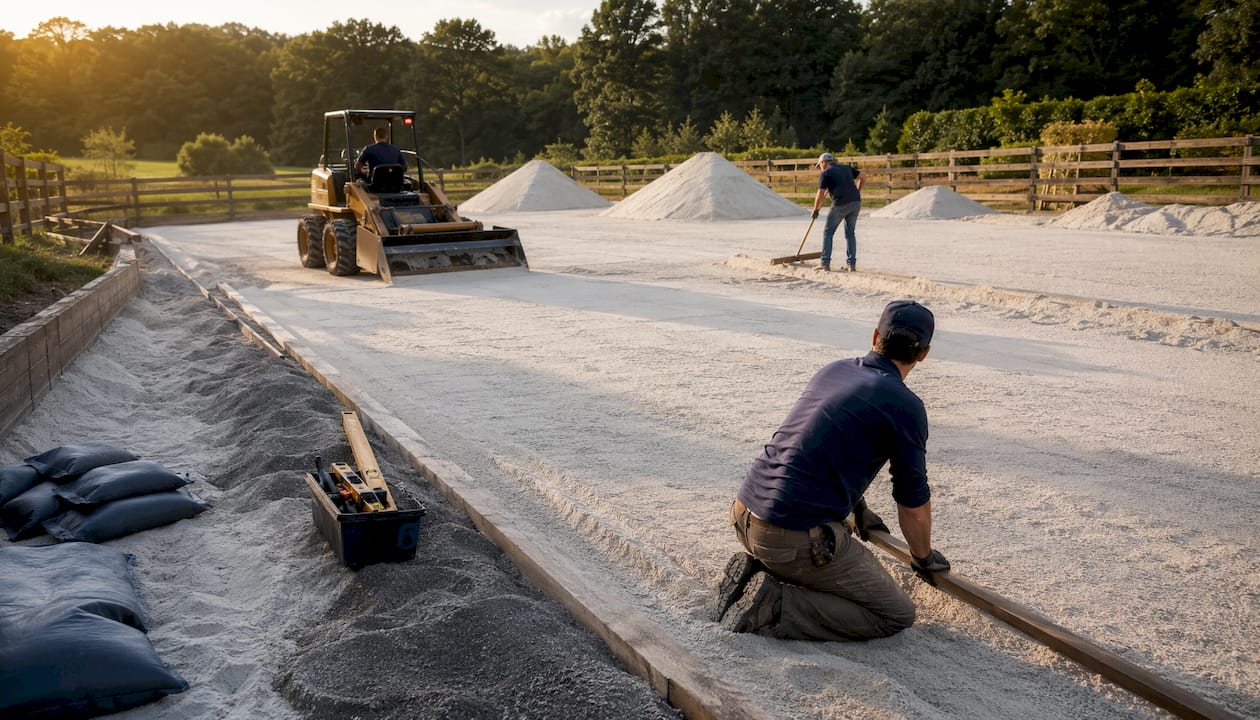
A standard arena construction places a silica sand base layer at approximately 100 mm depth, laid over a prepared sub-base and drainage membrane. Specialist fibres or rubber crumb are then blended into or laid on top of the sand to modify cushioning and grip. Pure silica sand alone tends to be too firm for most ridden work; the additives create what suppliers describe as a “root-like” support structure that balances firmness with compliance.
Pro Tip: Never exceed 150 mm total depth for a ridden surface. Sand deeper than around 150 mm becomes stressful on horse tendons, regardless of how well it drains.
Practical installation and maintenance points:
- Lay silica sand over a geotextile membrane to prevent sub-base contamination migrating upward
- Compact the base layer lightly before adding fibre or rubber additives
- Water the surface regularly: silica sand drains freely and loses moisture quickly in dry or warm weather, which can leave the footing loose and dusty
- Harrow or drag the surface after each session to redistribute particles and prevent compaction channels
- Top-dress with fresh sand periodically as the surface wears, particularly in high-traffic areas near fences and centre lines
For guidance on arena surface construction tailored to specific disciplines, Equestrian Surface Solutions provides detailed specifications covering layering depth, additive ratios, and drainage requirements.
Industry standards and expert insight on silica sand quality
The biomechanical case for sub-angular silica sand is well established. Research into equestrian surface stability shows that properly compacted sub-angular sand with controlled moisture delivers high shear resistance, meaning the hoof stays put during propulsion rather than sliding excessively. That controlled grip reduces load on the deep digital flexor tendon and suspensory ligaments, which are the structures most commonly injured on poor surfaces.
Moisture management is where many arenas fall short. Tuning moisture levels in a silica sand arena is not simply about preventing dust; it directly controls shear resistance and therefore injury risk. A properly watered silica surface provides what biomechanists call capillary tension between grains, which stiffens the matrix without making it rigid.
Additives are equally important. Pure silica sand combined with geotextile fibres or rubber crumb produces a surface that cushions landing while still supporting push-off, a balance that pure sand cannot achieve alone. The best footing for showjumping differs from the best footing for dressage or gallops, and additives are the primary tool for making that adjustment.
Pro Tip: Always request a laboratory sieve analysis and purity certificate from your supplier before purchasing. Washed river sand is sometimes sold as equestrian grade; only a lab report confirming ≥95% SiO₂ and sub-angular particle shape gives you reliable assurance.
Silica sand costs 25–50% more upfront than softer alternatives, but its quartz hardness means it holds its particle shape for years rather than breaking down into compacting fines. For arena managers, that translates directly into fewer top-dressings and lower long-term maintenance costs. Equestrian Surface Solutions supplies premium washed silica sand graded to UK equestrian standards, with full product specifications available on request.
Key takeaways
Equestrian silica sand, graded to high purity with sub-angular particles, is among the most durable and performance-consistent base materials available for UK horse arenas.
| Point | Details |
|---|---|
| Purity standard | Equestrian silica sand requires ≥95% SiO₂ content, confirmed by laboratory analysis. |
| Particle shape matters | Sub-angular grains interlock to deliver stability and shock absorption that rounded particles cannot. |
| Additives are necessary | Pure silica sand is too firm alone; fibres or rubber crumb balance cushioning with support. |
| Moisture management | Regular watering maintains shear resistance and prevents loose, dusty footing. |
| Cost versus longevity | Silica sand costs 25–50% more upfront but lasts significantly longer than softer sands. |
FAQ
Is silica sand the same as regular sand?
No. Regular building or river sand contains softer minerals and rounded particles that break down under hoof traffic, causing compaction and dust. Equestrian silica sand is washed, graded quartz sand with ≥95% SiO₂ and sub-angular particle shape, processed specifically for arena use.
Is silica sand safe for horses?
Yes, when correctly washed and graded. The washing process removes the fine clay and silt particles that cause dust and compaction. River sands with softer minerals break down into respirable dust over time, which poses a respiratory risk; properly prepared silica sand does not.
What is the best sand for equestrian arenas?
Washed, sub-angular silica sand with ≥95% SiO₂ content and a defined narrow particle size grading is the industry standard for UK riding arenas. It is typically blended with geotextile fibres or rubber crumb to tailor the surface to the specific discipline.
What is silica sand used for in equestrian settings?
Silica sand forms the base layer of riding arenas, training gallops, round pens, lunging areas, and therapeutic riding facilities. It provides the drainage, stability, and durability that underpin safe, consistent footing for horses across all disciplines.
