
Arena surface failure is defined as any deterioration in footing quality, structural integrity, or drainage performance that compromises safe and consistent use. For equestrian professionals, recognising examples of arena surface failures early is the difference between a manageable repair and a full rebuild. Failures rarely arrive without warning. They develop through a combination of poor design, deferred maintenance, and environmental stress. Understanding the causes behind each failure type gives you the knowledge to act before a small problem becomes a costly one.
1. Examples of arena surface failures from heavy machinery and multi-use stress
Heavy machinery causes some of the most severe and sudden arena surface damage on record. Structural damage from cranes and stage setups at TDECU Stadium in April 2026 was so extensive that the spring game had to be relocated entirely. That outcome illustrates a critical point: surfaces designed for sport loads cannot absorb the point loads generated by construction equipment.
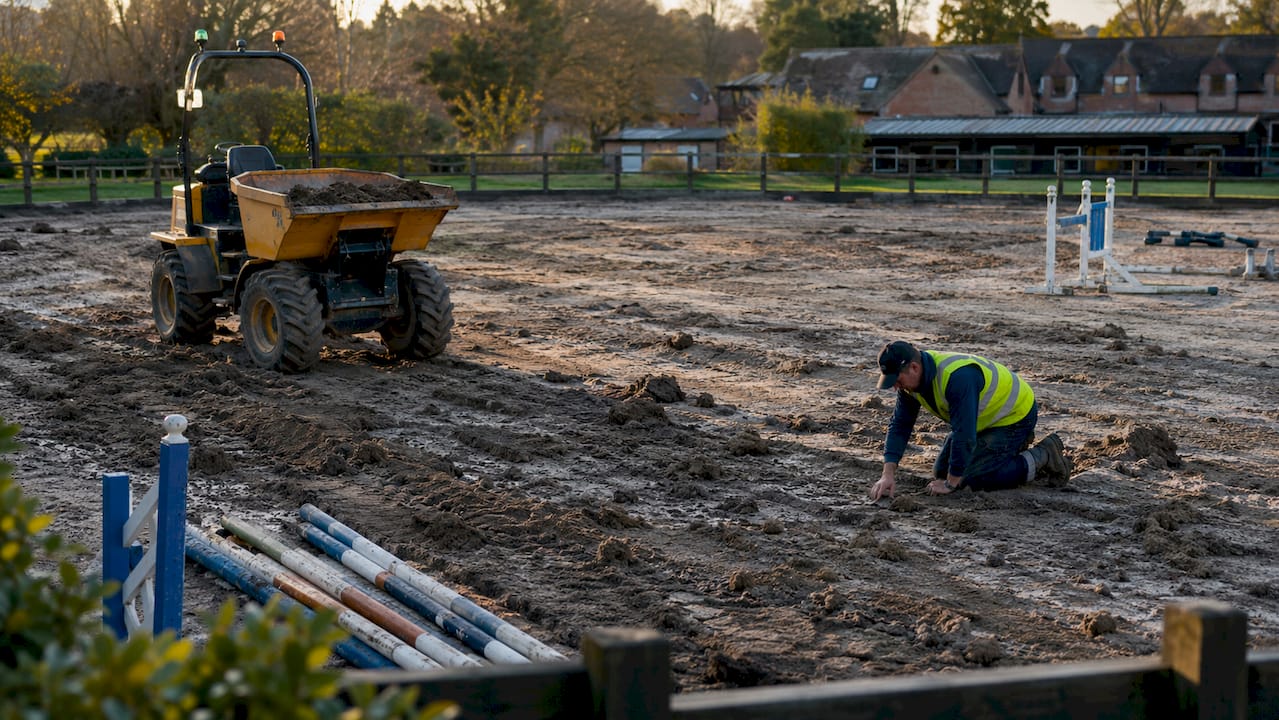
Multi-use event setups apply unexpected concentrated forces that stress surfaces well beyond their intended design limits. The damage is often invisible at first. By the time cracking or delamination appears, the sub-base has already been compromised.
Common signs of machinery-related surface damage include:
- Deep rutting or compaction in localised zones
- Cracking along load-bearing seams or joints
- Separation between the surface layer and the sub-base
- Uneven footing that appears after heavy equipment has crossed the arena
Pro Tip: Before any non-equestrian event uses your arena space, lay protective matting rated for the equipment weight. A short-term precaution prevents months of repair work.
2. Frost heave and moisture-related distortions
Frost heave is one of the most destructive and least visible examples of arena surface damage. It occurs when moisture in the soil subgrade freezes, expands, and pushes the surface upward from below. Water expands by approximately 9% upon freezing. That expansion generates hydrostatic pressure sufficient to crack slabs and delaminate surface layers.
The consequences can be dramatic. Frost heave at Halifax Forums Civic Arena caused surface unevenness of up to one foot, forcing the arena to close entirely. For equestrian arenas, even a few centimetres of uneven footing creates a serious trip hazard for horses.
Understanding why arena surfaces fail in frost requires looking at three interacting factors:
- Inadequate drainage allowing water to pool in the sub-base
- Absence of sub-slab heating to prevent ground freezing beneath the surface
- Poor soil preparation that leaves moisture-retentive material under the slab
Sub-slab heating is not a comfort feature. It is freeze protection. Without it, any arena built on moisture-bearing ground is at risk of heave, regardless of how good the surface material is.
To prevent arena surface freezing, drainage and sub-slab systems must be designed together, not added as afterthoughts. Equestrian Surface Solutions recommends arena membranes as a foundational layer that manages moisture migration before it reaches the sub-base.
3. Design and maintenance failures that accelerate surface degradation
Poor building envelope design is a leading cause of accelerated surface failure in covered arenas. Improper vapour barriers and air sealing increase arena energy load by 30–40%. That additional load forces refrigeration and climate systems to work harder, which in turn accelerates thermal cycling and surface stress.
The damage mechanism is indirect but consistent. Excess moisture infiltration softens sub-base materials. Thermal fluctuations cause repeated expansion and contraction. Over time, the surface layer loses adhesion and begins to crack or shift.
| Design element | Failure risk when neglected |
|---|---|
| Vapour barrier | Moisture infiltration softens sub-base |
| Air sealing | Thermal cycling accelerates surface cracking |
| Drainage channels | Water pooling causes delamination |
| Sub-slab heating | Ground frost heaves the surface from below |
Pro Tip: Commission an integrated environmental audit before any major refurbishment. Addressing drainage, vapour control, and heating as a single system costs less than fixing each failure separately.
Arena surface performance depends on all these systems working together. Fixing the surface without addressing the environment beneath it is a short-term solution that leads to the same failure within a few seasons.
4. Wooden and synthetic surface failures from leakage and poor installation
Water ingress through roofs and walls causes rapid and serious damage to wooden and synthetic arena floors. A basketball hall in Ludhiana experienced water seepage in 2025–2026 that caused floor warping, creaking, and protruding nails. Those conditions created direct safety risks for every user of the facility.
Equestrian arenas with synthetic fibre or rubber footing face similar risks when installation is poor or drainage is absent. Key failure signs include:
- Surface lifting or bubbling caused by trapped moisture beneath the layer
- Uneven patches where the footing has migrated or compacted unevenly
- Slippery zones after rain, indicating drainage failure
- Visible separation between the membrane and the surface material
Poor installation compounds these problems. A surface laid without a correctly graded base will never drain properly, regardless of material quality. The arena base is the single most important factor in long-term surface performance. Getting it wrong at the build stage creates a failure that no amount of top-dressing will correct.
5. Pipe deterioration and sub-surface leaks
Ageing infrastructure beneath arena surfaces causes failures that are invisible until they become catastrophic. Leaking pipes beneath the Mariners Centre ice pad in Yarmouth required a full floor replacement, with labour-intensive works running through august 2026. The repair was far more disruptive and expensive than preventative pipe inspection would have been.
Deferred maintenance leads to irreversible damage requiring costly full-floor replacements. Surface failures are almost always the result of cumulative neglect rather than a single event. For equestrian arenas, this means that a surface which looks acceptable on the surface may be failing structurally beneath it.
6. Preventative measures and refurbishment approaches
Preventing surface failure requires addressing the conditions that cause it, not just repairing the visible damage. Sub-slab heating is the most effective protection against frost heave, and it must be coordinated with drainage design during the original build. Retrofitting it later is possible but significantly more expensive.
Practical refurbishment steps drawn from documented failure cases include:
- Assess drainage performance before any surface replacement. A new surface on a failing base will fail again.
- Inspect sub-base compaction and moisture content across the full arena footprint.
- Replace or upgrade membranes to prevent moisture migration from the sub-base into the surface layer.
- Use fibre-blended or rubber-modified surfaces where frost resistance is a priority. Equestrian Surface Solutions offers all-weather surface options suited to UK climate conditions.
- Schedule annual maintenance checks rather than waiting for visible failure signs.
| Refurbishment action | Primary failure it addresses |
|---|---|
| Sub-slab heating installation | Frost heave and ground freezing |
| Drainage channel upgrade | Water pooling and delamination |
| Membrane replacement | Moisture migration into sub-base |
| Surface material upgrade | Compaction, migration, and uneven footing |
| Base re-grading | Drainage failure and surface instability |
Following a structured arena maintenance programme reduces the likelihood of reaching the point where full replacement is the only option.
Key takeaways
Arena surface failures are almost always preventable when drainage, sub-base preparation, and surface material selection are treated as an integrated system from the outset.
| Point | Details |
|---|---|
| Frost heave is a structural risk | Water expanding 9% on freezing generates enough pressure to crack slabs and close arenas. |
| Machinery causes sudden failure | Point loads from cranes and equipment destroy surfaces designed only for sport use. |
| Design failures compound over time | Poor vapour barriers and drainage accelerate surface degradation season by season. |
| Deferred maintenance is the root cause | Cumulative neglect leads to full-floor replacements that proactive checks would have prevented. |
| Refurbishment must address the base | Replacing the surface without fixing drainage or sub-base conditions repeats the failure. |
What I’ve learned from watching arenas fail
The failures I see most often share one characteristic: the surface was treated as a standalone product rather than the top layer of a system. Owners invest in quality fibre or sand, lay it on a poorly graded base, and then wonder why the footing is uneven within two seasons. The surface did not fail. The base did.
The second pattern I notice is the tendency to patch rather than investigate. A soft spot appears, more material gets added, and the underlying drainage problem continues unchecked. By the time the owner calls for professional advice, the sub-base is saturated and the repair bill is three times what it would have been at the first sign of trouble.
My honest recommendation is this: treat every surface issue as a symptom, not the problem itself. Before you spend money on materials, understand what caused the failure. Is it drainage? Base compaction? Frost? The answer changes everything about what you buy and how you lay it. Equestrian Surface Solutions exists precisely to help you work through that diagnosis before committing to a solution.
— Stacey
Professional arena surface materials and refurbishment support
When a surface failure has been diagnosed, the next step is selecting the right materials to rebuild correctly.

Equestrian Surface Solutions supplies specialist riding arena sands, fibre blends, rubber additives, drainage membranes, and surface top-up products for arenas across the UK. Whether you are managing a full refurbishment or addressing a specific failure, the right material choice depends on your discipline, base conditions, and climate exposure. Visit the arena surfaces range to compare footing options, or read the competition surface specification guide for detailed technical guidance. If you are ready to discuss your project, request a quote directly and get expert advice matched to your arena’s specific needs.
FAQ
What causes most arena surface failures?
Most arena surface failures result from cumulative neglect of drainage, sub-base preparation, and moisture management rather than a single event. Deferred maintenance is the most common root cause.
Why do arena surfaces fail in frost?
Water expands by approximately 9% when it freezes, generating hydrostatic pressure that cracks slabs and pushes surfaces upward. Poor drainage and absent sub-slab heating make arenas particularly vulnerable.
How do I prevent arena surface freezing?
Install sub-slab heating coordinated with a proper drainage system, and use a moisture-management membrane beneath the surface layer. These three elements work together to prevent ground frost from reaching the surface.
What are the signs of a failing arena surface?
Key warning signs include uneven footing, soft or boggy patches, surface lifting or bubbling, visible cracking, and drainage that is slower than usual after rain.
When does an arena surface need full replacement rather than repair?
Full replacement is necessary when the sub-base has been compromised by moisture saturation, frost heave, or structural damage. Patching the surface layer without addressing the base will not resolve the underlying failure.
