

Surface stability in horse arenas is defined as the footing’s capacity to support a horse’s weight and movement without excessive displacement, shifting, or unevenness. It is the single most important quality of any arena surface, directly affecting balance, injury prevention, and riding performance. The industry term for this concept is “arena footing stability,” and it encompasses every layer from the sub-base to the top surface material. Understanding what is surface stability in horse arenas means looking at material composition, fibre content, drainage, and grooming together as one system. Equestrian Surface Solutions works with horse owners and trainers across the UK to get each of these elements right.
What factors determine surface stability in horse arenas?
Arena footing stability depends on four interacting elements: the footing material, fibre content, base construction, and environmental management. No single factor works in isolation.
Footing material forms the foundation of stability. UK arenas commonly use silica sand with grain sizes of 0.06–0.5 mm laid at a depth of 100–150 mm over a free-draining base. Angular grains interlock better than rounded ones, reducing lateral movement underfoot.
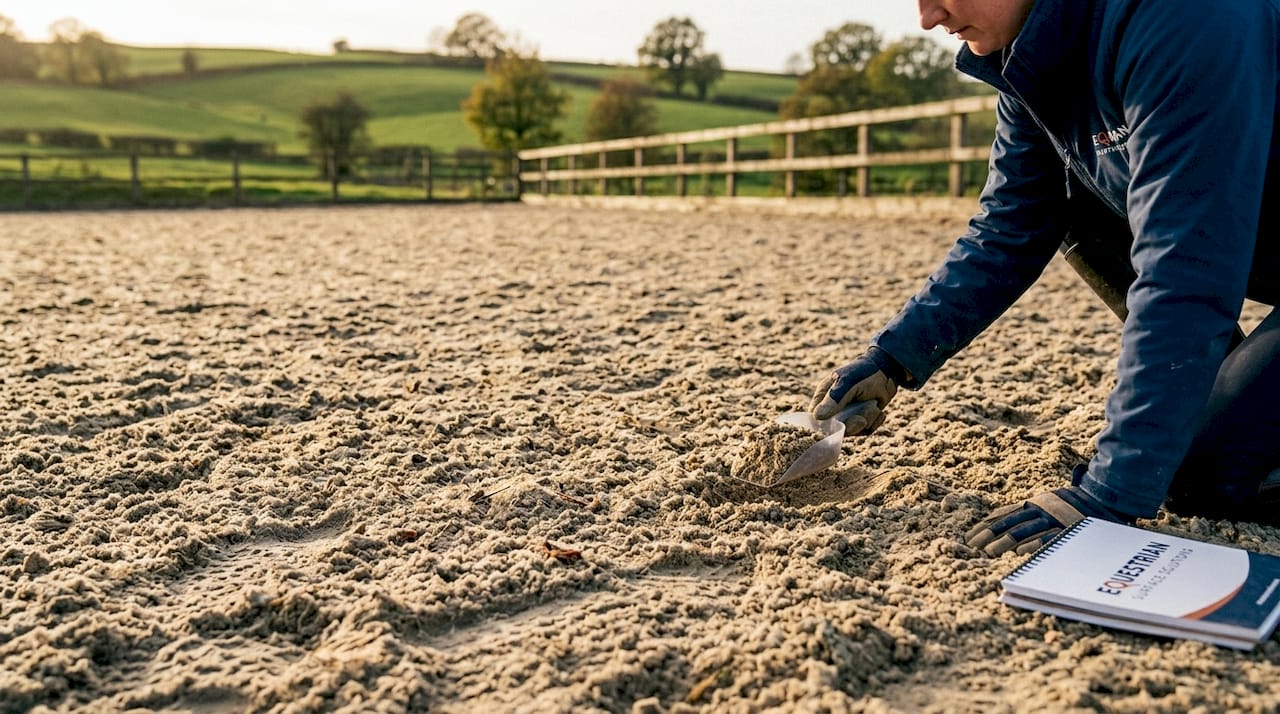
Fibre content is the element most riders underestimate. Fibre strands bind sand particles together, preventing the surface from shifting under load. The percentage of fibre required varies significantly by discipline, which is covered in detail below.
Base construction and drainage determine how the surface behaves in wet conditions. A poorly drained base causes the footing above it to become waterlogged and unstable. The arena base directly affects how long the surface above it stays consistent.
Environmental and grooming management complete the picture. High-quality materials alone cannot ensure stability without consistent moisture control and regular grooming. Moisture that is too low causes the surface to become loose and dusty; too high and it becomes compacted and slippery.
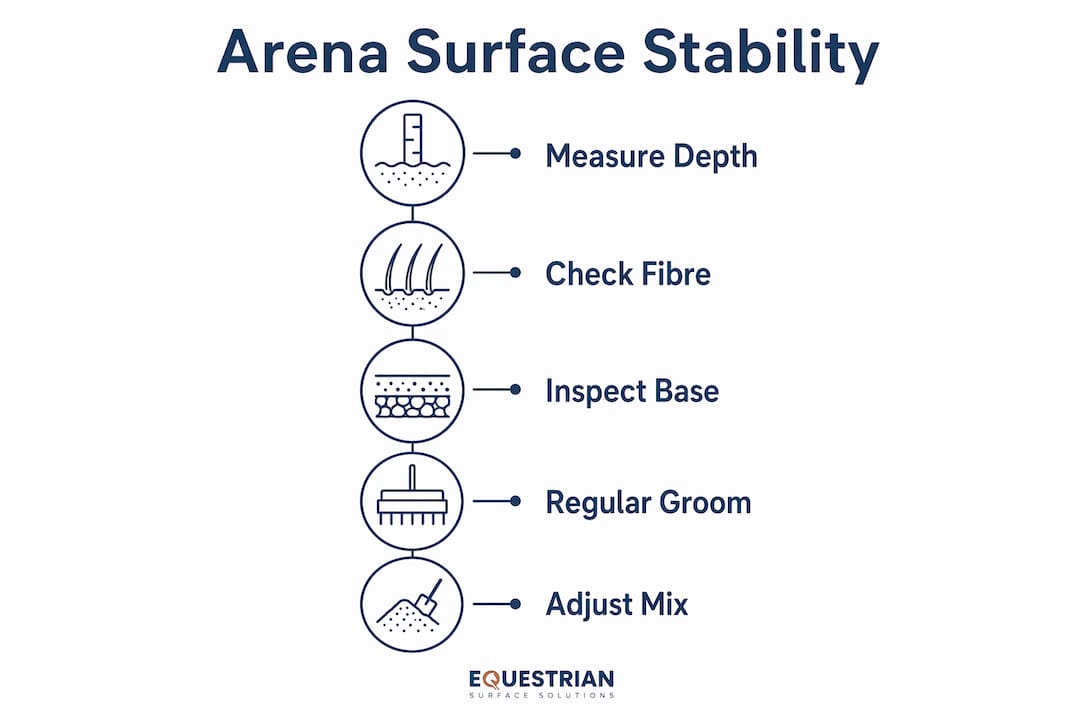
- Check surface moisture daily, especially in summer and after heavy rain.
- Groom the arena to a consistent depth after every session.
- Inspect the base layer annually for signs of compaction or drainage failure.
- Top up fibre content seasonally to compensate for breakdown and displacement.
Pro Tip: Use a penetrometer or simple depth gauge to measure footing depth at multiple points across the arena. Variation of more than 20 mm between spots signals uneven compaction that grooming alone will not fix.
How does surface stability impact horse biomechanics and injury risk?
Stable footing does more than prevent slipping. Footing quality directly affects proprioception and muscle recruitment, meaning the horse’s nervous system relies on the surface to calibrate balance, strength, and coordination with every stride.
When the surface shifts unpredictably, the horse braces. Uneven footing causes compensatory movements that increase strain on tendons and ligaments over time. This is not a gradual, minor effect. Around 50% of equine lameness cases treated by equine veterinarian Dr. Rob van Wessum relate directly to improper arena footing causing tendon and suspensory ligament injuries. That figure shows how significant the footing-to-injury connection is in everyday riding environments.
“A ‘trampoline-like’ responsive surface offering energy return is preferred over a hard or fixed one. Excessive traction increases joint loading risks just as much as a surface that is too deep or too loose.”
The Horse
The biomechanical ideal is a surface that provides grip without locking the hoof, and cushioning without excessive sinkage. Five mechanical properties define this balance: impact firmness, cushioning, responsiveness, grip, and uniformity. Each one affects a different phase of the horse’s stride.
The consequences of getting this wrong follow a clear sequence:
- The surface shifts or compresses unevenly under the hoof.
- The horse loses proprioceptive feedback and braces through the limb.
- Compensatory loading increases stress on soft tissue structures.
- Repetitive strain accumulates, leading to lameness or injury.
How do surface stability needs vary by equestrian discipline?
Different disciplines place very different demands on the surface, and a single standard mix rarely suits all of them. Dressage demands more cohesion to prevent hoof sinkage during lateral movements, while pleasure riding tolerates and often prefers a looser, more forgiving surface.
Fibre content is the primary variable adjusted between disciplines. Industry standards specify fibre content by discipline: pleasure blends use minimal fibre, dressage blends use approximately 15%, jumper surfaces use approximately 30%, and high-level competition arenas can reach up to 50% fibre plus geotextile layers for maximum stability. These figures reflect the intensity and type of movement each discipline demands.
| Discipline | Fibre content | Surface character |
|---|---|---|
| Pleasure riding | Minimal | Loose, forgiving, low cohesion |
| Dressage | ~15% | Cohesive, minimal sinkage, lateral stability |
| Show jumping | ~30% | Responsive, grip-focused, energy return |
| High-level competition | Up to 50% + geotextile | Maximum stability, consistent under heavy use |
Rider and horse preference also play a role within each discipline. A horse with a history of soft tissue injury may benefit from a slightly deeper, more cushioned surface even in a dressage context. Trainers working with young horses often prefer a surface with more give to reduce concussive loading during early training. Equestrian Surface Solutions can advise on arena footing for all disciplines to help you match the surface to your specific programme.
How to assess, improve, and maintain arena surface stability
Assessing stability starts with measurement, not appearance. Visual inspection alone is insufficient; impact firmness and shear strength require consistent measurement to reveal problems that the eye misses. Many owners discover their surface has compacted unevenly only after a horse stumbles or shows signs of stiffness.
Practical steps to maintain stable arena surfaces:
- Groom consistently: Drag or harrow the surface after every session to redistribute material and prevent compaction channels forming along track lines.
- Manage moisture actively: Water the surface before riding in dry weather. Avoid riding on a waterlogged surface after heavy rain.
- Check depth regularly: Measure footing depth at the centre, corners, and along the track at least monthly. Aim for consistent depth across all zones.
- Replenish fibre seasonally: Fibre breaks down and migrates over time. Top up annually or when you notice the surface feeling looser than usual.
- Review the base annually: Drainage failure at base level undermines everything above it. An annual inspection catches problems before they become expensive.
Pro Tip: Ride a figure-of-eight pattern across the full arena before each session. You will feel surface inconsistencies through the horse’s stride far more reliably than any visual check.
Stable, well-maintained footing is foundational for equine soundness, but it must be paired with varied training to avoid repetitive strain from consistent movement patterns on the same surface. The arena maintenance guide from Equestrian Surface Solutions covers grooming schedules and moisture management in detail.
Key takeaways
Surface stability in horse arenas is a systemic quality determined by footing material, fibre content, base construction, and consistent maintenance working together to protect horse health and performance.
| Point | Details |
|---|---|
| Stability is a system, not a single factor | Footing material, fibre, base, and grooming all contribute equally to a stable surface. |
| Fibre content varies by discipline | Dressage needs ~15% fibre; jumpers need ~30%; high-level competition surfaces up to 50%. |
| Injury risk is directly linked to footing | Around 50% of equine lameness cases relate to improper arena footing and surface instability. |
| Visual checks are not enough | Measure impact firmness and footing depth consistently rather than relying on appearance. |
| Maintenance is non-negotiable | High-quality materials lose their stability without regular grooming and moisture management. |
What I have learned from years of watching arenas fail
The most common mistake I see is owners investing in good materials and then assuming the job is done. A well-specified surface installed on a poorly drained base will fail within two seasons. The base is invisible once the surface is laid, which is exactly why it gets neglected.
The second mistake is treating grooming as optional. I have seen beautifully specified silica sand and fibre blends turn into a compacted, uneven mess within months because the arena was harrowed only occasionally. The surface does not maintain itself. Consistent grooming is what keeps the fibre distributed and the sand particles from locking together.
What surprises most owners is how much the horse tells you about the surface. A horse that is reluctant to work on one rein, or that shortens its stride in the corners, is often responding to surface inconsistency rather than a training issue. The surface is always communicating. The question is whether you are listening.
My honest advice: treat your arena surface like a piece of equipment that needs regular servicing. Schedule grooming, schedule depth checks, and schedule a professional review of the base every few years. The cost of prevention is a fraction of the cost of rehabbing a horse with a tendon injury caused by avoidable footing failure.
— Stacey
Choosing the right materials for a stable arena surface
Getting the surface right from the start saves significant time and cost over the life of your arena. Equestrian Surface Solutions supplies specialist riding arena silica sand, fibre blends, rubber additives, and drainage membranes matched to your discipline, climate, and budget.
Whether you are building a new arena or refurbishing an existing surface, the right material specification makes the difference between a surface that lasts and one that needs constant remedial work. Equestrian Surface Solutions offers arena surface materials and self-build kits across the UK, with expert guidance on fibre content, sand grade, and base requirements for your specific situation. Request a quote today and get a surface specification built around your horses and your goals.
FAQ
What is surface stability in a horse arena?
Surface stability is the footing’s ability to support a horse’s movement without excessive shifting, sinkage, or unevenness. It depends on material type, fibre content, base construction, and consistent grooming working together.
What are the best materials for a stable horse arena surface?
Angular silica sand with grain sizes of 0.06–0.5 mm, combined with an appropriate fibre blend, forms the most reliable base for arena stability in the UK. The correct fibre percentage depends on your discipline.
How does poor arena footing cause injury?
Unstable or uneven footing disrupts the horse’s proprioceptive feedback, causing compensatory movement patterns that increase strain on tendons and ligaments. Around 50% of equine lameness cases are linked directly to improper arena footing.
How often should I maintain my arena surface?
Groom the surface after every session and check footing depth monthly. Replenish fibre content at least annually and inspect the base layer once a year for drainage issues.
Does fibre content need to change for different disciplines?
Yes. Dressage surfaces use approximately 15% fibre for lateral stability, jumping surfaces use approximately 30% for responsiveness, and high-level competition arenas can use up to 50% fibre plus geotextile layers.
