
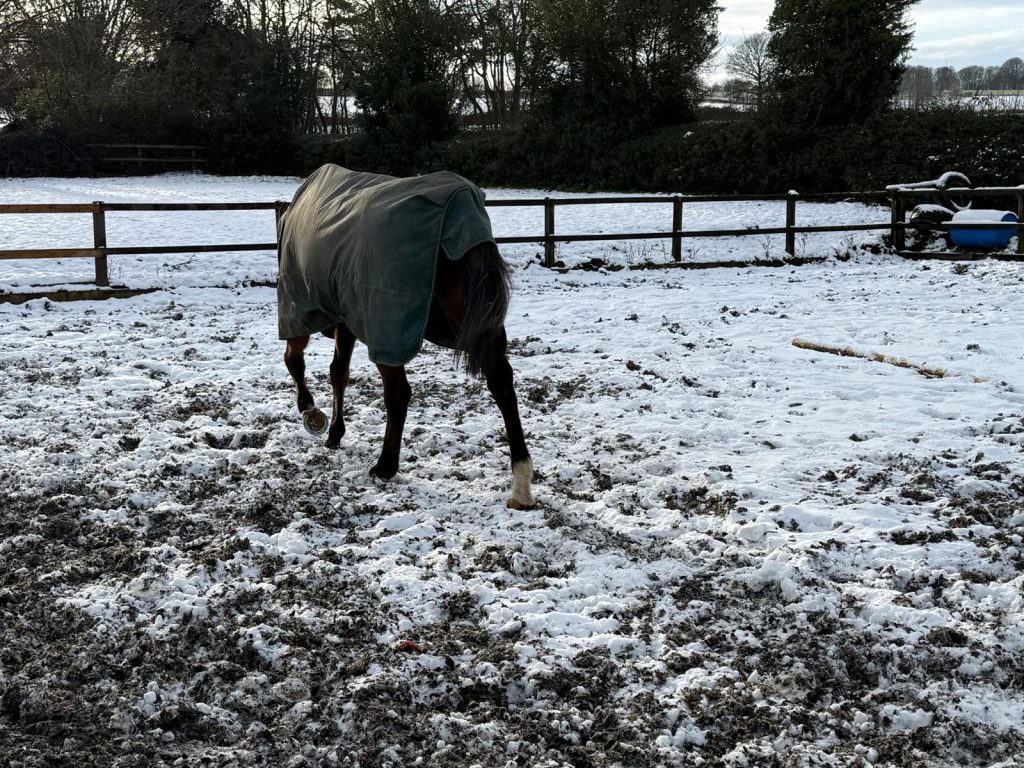
Winter brings shorter days, colder temperatures and challenging ground conditions that can make regular exercise difficult. Yet maintaining horse fitness through winter is vital for both physical health and mental wellbeing. The key is adapting routines while prioritising safety and surface conditions.
The Risks of Winter Riding
Hard, frozen or waterlogged ground increases concussion and slipping hazards. Reduced daylight also limits hacking opportunities, meaning many horses rely heavily on arena work. Riding in cold weather horses can tighten up more quickly, making warm-ups and footing quality even more important.
Why the Arena Becomes Essential
A reliable surface allows consistent schooling when outdoor riding isn’t safe. However, many arenas struggle in winter – freezing solid, holding water or becoming compacted. These issues don’t just affect performance; they increase strain on joints and raise injury risk.
Fibre Makes Winter Work Possible
Fibre arenas perform exceptionally well in cold conditions. The structure traps air and prevents moisture binding, helping the surface stay loose, cushioned and rideable even when temperatures drop. This improves arena winter safety and keeps horses moving comfortably without interruption.
Winter Fitness Matters
Regular controlled work maintains muscle tone, joint mobility and overall condition. Horses kept in steady exercise through winter return to spring stronger, sounder and less prone to injury.
With the right preparation and an all-weather fibre arena, winter riding becomes safe, consistent and far less dependent on unpredictable ground conditions.
