
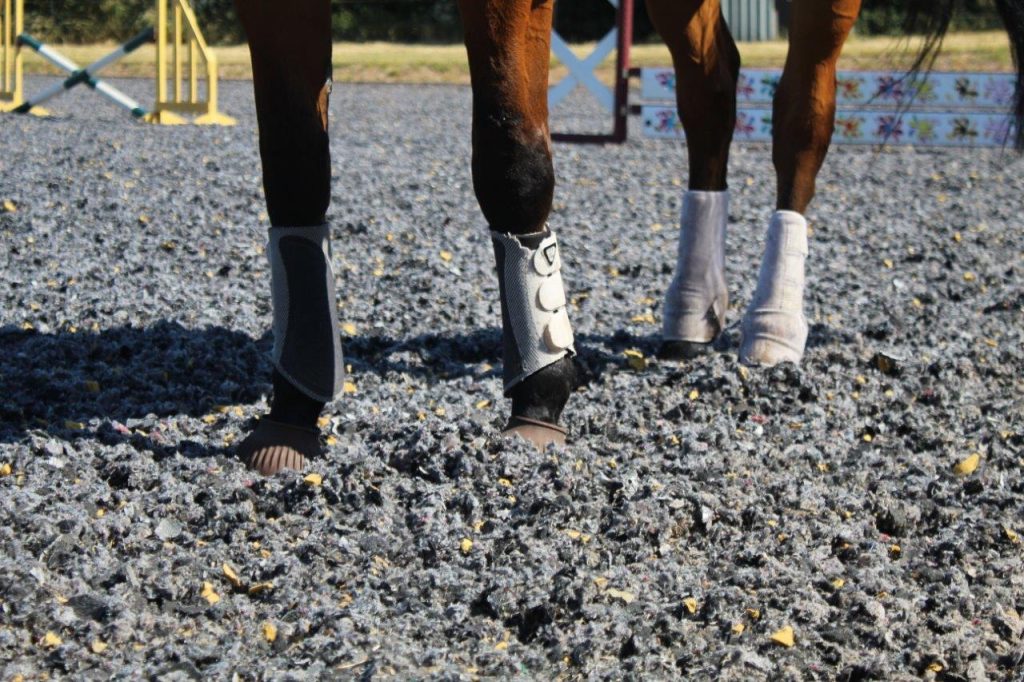
Choosing the right standalone arena surface is critical for performance, safety and long-term durability. Unlike traditional sand-only arenas, standalone surfaces are designed to deliver cushioning, grip and stability without relying on constant additives or complex layering.
But not all riding arena materials perform the same. A good horse arena surface must meet several key criteria to protect horses and remain usable in all conditions. Take a look at some of our surface reviews from satisfied customers recently.
Consistent Cushioning Under Hoof
Shock absorption is essential to reduce strain on joints and tendons. Quality standalone surfaces create a springy yet stable feel that supports movement while preventing excessive concussion. Carpet fibre arenas are widely recognised for their natural cushioning and comfort.
Reliable Grip & Stability
A surface should offer enough resistance for push-off without becoming deep or shifting. Fibre-based systems interlock to provide secure footing, improving balance through turns and transitions while maintaining rider confidence..
Weather Resilience
Standalone surfaces must perform in wet, dry and cold conditions. Materials that retain structure and drain effectively prevent puddling, freezing and compaction, ensuring year-round rideability.
Low Maintenance
A good surface should hold its consistency with minimal harrowing and topping up. Fibre reduces migration and keeps footing level across high-use areas.
Longevity
Durable materials that resist breakdown offer better long-term value and fewer costly replacements.
A well-designed standalone arena surface combines cushioning, grip and resilience — giving horses safer, more comfortable footing every day.
